

The results are in! No big shakeups:
A steady top 10 signals trust in Washington golf rankings
By Tony Dear • CG Editor & Bob Sherwin • CG Staff Writer
We find it settling, heartening, and encouraging that there’s relatively little movement in our reader-driven Cascade Golfer Top 10 Best Public Courses in Washington every two years.
Why? We think it demonstrates two very important aspects of the list. First, we believe it’s an endorsement of the voting system and shows that the number of readers who vote makes this a worthwhile and credible ranking. If the order or identity of the courses were completely different from one ranking to the next, it might suggest that some biased voters colluded or a major change at one of the courses may have altered the outcome.
We got the impression that might have happened once or twice in the rankings’ early years when a couple of courses we hadn’t expected to appear showed up in the top 20 or so. But it hasn’t happened for several years, and the courses that appear regularly in the top 10 are clearly there because of an objective and genuine belief among a significant number of people that this is where they belong.
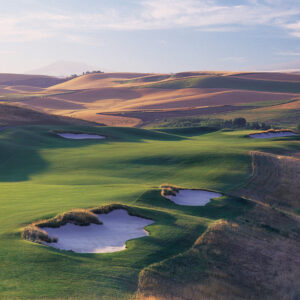
Second, it’s obviously confirmation of how good these courses are. You have chosen Chambers Bay as the top public course in the state in six of the seven contests to date. How fortunate we are that then-Pierce County Executive John Ladenburg had the vision to use the former sand/gravel quarry in University Place for a public golf course. And that Robert Trent Jones Jr., Bruce Charlton and Jay Blasi had the skill to turn it into a beautiful and invigorating links course.
It fits most people’s definition of a links by playing over firm, sand-based ground and fast-running fescue fairways next to a major body of water with no trees (well, one) and being good enough to host the U.S. Open. It is Golf Digest’s highest-ranked course in Washington and No. 19 in its current list of America’s top 100 public courses. Golfweek likewise ranks it as the best public course in Washington, and the 17th best in the USA. Those are some heady numbers in a country with roughly 12,000 public golf courses.
Of the major publications, Golf Magazine is alone in not rating it the best in Washington. For its No. 1 in the state, it opts for the No. 2 course in our rankings — Gamble Sands, which did overtake Chambers Bay for the top spot in Cascade Golfer in 2017 but has settled into the No. 2 slot since. Golf Magazine rates Gamble Sands No. 18 in the U.S. (public) and Chambers Bay No. 31.
These are deservedly the best two public courses in Washington, and both are highly rated in the nation. The gap between them and national publications’ third-ranked course in Washington is significantly larger than the gap between the two of them. Plus, it’s not always the same course in third. Sometimes the Olympic Course at Gold Mountain gets the nod, sometimes it’s Wine Valley. But the point stands — the gap between Chambers Bay/Gamble Sands and Gold Mountain/Wine Valley is wide compared to that between Chambers and Gamble. Gold Mountain gets your vote as No. 3, as it has done for the last three contests.
But then something a little odd happens. At fourth in our (your) rankings is The Home Course, Mike Asmundson’s parkland beauty in DuPont with amazing views of the Olympic Mountains and Puget Sound. But it doesn’t get a mention in Golf Digest’s list of the best 15 courses in Washington (including private courses). It’s similarly shut out in Golf Magazine’s list of best Washington public courses and, to introduce another respected ranking entirely, comes in 14th among public courses in the Evergreen State on top100golfcourses.com. We were a pleasantly surprised the PNGA/WSGA-owned facility came in at No. 4 in our rankings two years ago, but it obviously wasn’t a blip because it’s back at No. 4 this time. So, who’s right?
We trust our readers implicitly. They know local golf better than anyone and the fact The Home Course has finished fourth two contests running says a lot. So, what are the national publications missing? Do they just not play it enough — one-and-doners who obviously miss its finer points during their one visit?
We’re inclined to think so. Mind you, we will be watching with great interest again in 2028.
Something else we’ll be keeping an eye on is Scarecrow’s expected rise in the rankings. It appeared on only 31 percent of ballots this time and yet still came in 14th, meaning those who have been lucky enough to play Gamble Sands’s younger sibling already obviously thought very highly of it.
Frequent visitors to Brewster, Wash., love both and, together, they make for a multi-course resort that only golfers in a handful of places could possibly look down on — Pinehurst in North Carolina, Bandon in Oregon, Monterey in California, Kiawah Island in South Carolina, Sand Valley or Kohler in Wisconsin, Streamsong in Florida, and maybe a couple of others.
Lastly, we’re glad to see Washington National continuing its rise (17th, 10th and 7th the last three contests) up the ladder. It’s now over 600 votes clear of Desert Canyon in 8th which shows just how good John Fought’s 2000 design must be.
As we say, we think Evergreen State golfers know what they’re talking about and putting Washington National in the mid-table mix alongside Salish Cliffs is absolutely how it should be. It’s only 76 votes shy of Salish, in fact, so that’s another interesting contest to watch out for next time.
Enjoy the results and share your input with us — we’d love to hear your thoughts.
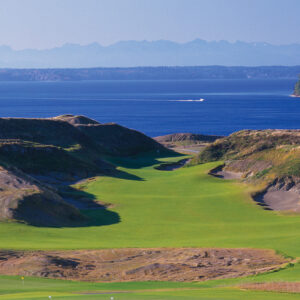
1 • Chambers Bay • University Place
What made this course No. 1 again goes back to a decision in April 2019 when all the greens had fescue grass stripped out. The golf world bore witness to how the parched fescue barely held up at the finish of the 2015 U.S. Open.
The greens were replaced with more durable and reliable poa annua grass. The retrofit made the greens more receptive and consistent. It helped Chambers to be continually ranked high in the nation, 19th by Golf Digest among public courses and 31st by Golf.com. With the 20th anniversary of the course next summer, the Robert Trent Jones, Jr. layout has continued to evolve. The University Place course added a $4 million turn stand, called The Landing, and attracts premier events, the Junior Amateur next year (Charley Woods’ final year of eligibility), the 2028 U.S. Amateur Four-Ball and the 2033 U.S. Amateur.
“The course had the best year it ever had last year and we’re tracking to do even better this year,” said head golf pro Ryan Young.
Whether the course is awarded another U.S. Open is uncertain, but what matters is we have, on our doorstep, a world-class layout to play any time we want.
2 • Gamble Sands • Brewster
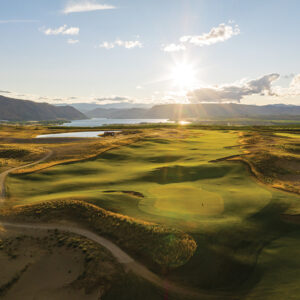
It doesn’t matter who’s No. 1 in our poll — Gamble Sands or Chambers. Both have spent time at the top and either one could be No. 1 in any given year.
It’s not a zero-sum game. If there is a winner, it’s us. We have access to both, albeit 200 miles apart. We don’t need to choose. Both are world class. Both are challenging links-style layouts with awesome views and accommodating tee positions that make them playable and enjoyable. Gamble, which opened in 2014 in the middle of the Okanogan County (Brewster) apple orchards, was hailed as the best new course in the nation.
That was just the beginning of its impact. What followed was a 37-room Inn at Gamble Sands in 2017 with the adjacent 100,000-square-foot Cascade Putting Course. A 14-hole, par-3 course, Quicksands, opened in 2020. The Barn, a casual dining spot, came along in 2024. Finally, a second course, Scarecrow, designed again by David McLay Kidd, opened this year. Scarecrow is too new to climb high in this poll (it begins at No. 14), but it has generated a buzz. Golfers love it. By the next poll, the state’s most flourishing golf complex might have two Kidd courses challenging for the top.
3 • Gold Mountain • Olympic • Bremerton
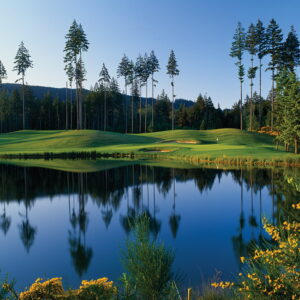
The Olympic course in Bremerton opened in 1996 and is an on-going and consistent reflection of the late John Harbottle’s design talent. The Tacoma-based architect, who died in 2012 at age 53, weaved a perpetual masterpiece among the firs.
Golfers who voted for Olympic as the third-best course recognize how well it’s conceived and how fairly it plays. It’s also among the best maintained courses anywhere, which is a challenge considering the heavy daily traffic. The Olympic course has hosted the 2006 U.S. Amateur Public Links, the NCAA men’s regionals in 2008 and 2015, the Husky Invitational and the 2011 U.S. Junior Amateur (won by 17-year-old Jordan Spieth).
Yet, despite hundreds of thousands of rounds, the course record remains at 65. Harbottle made sure it couldn’t be tamed. Anyone who has played the courses recently has seen that changes are coming to the massive 360-acre Gold Mountain complex, primarily to the adjacent Cascade course. Cascade, opened in 1971 and 17th on our list, is undergoing a $4 million renovation project to improve the bunkering, irrigation and hole rearrangement. By 2030 or so when the project winds down, Gold Mountain might have a pair of top 10 candidates.
4 • The Home Course • DuPont
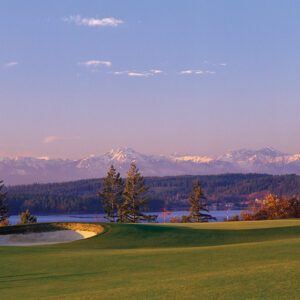
The Home Course always has been mentioned regionally with nearby Chambers Bay (opening within weeks of each other in 2007), but the DuPont layout clearly appeals to an abundance of local golfers and stands on its own. It was ranked ninth best five years ago, before jumping to fourth, where it remains. Among the reasons for the rise is offered by GM Justin Gravatt.
“If you have golfed here before, you are familiar with our sod-faced bunkers that are reminiscent of old Scottish courses,” he said. “This last year we went through and renovated all of our sod-faced bunkers with a new synthetic sod that allows the bunker to have that sharp clean look year after year.”
Golfers have been comfortable with the 7,420-yard layout, its architectural nuances and its illustrious history. The land dates to the Salish people more than 1,000 years ago. Hudson’s Bay Co. established a trading post (and evidence of a six-hole golf circuit around the post), then E.I. du Pont de Nemours Co., which made explosives to cultivate the land, and finally Weyerhaeuser made it’s mark. It is now owned cooperatively by the Pacific Northwest Golf Association and Washington Golf. It also helps that the course has about the cheapest green fees on our list.
5 • Wine Valley • Walla Walla
Wine Valley GC in Walla Walla is a lovely road trip no matter where you start. It’s 20 miles from the Oregon border in Washington’s southeast corner, 250 miles from Seattle, 230 from Portland and even 170 from Spokane. It is probably the least played, most beloved course on our list, with enough loyalty love to once again rank fifth. It just goes to show, you can’t hide quality. Its popularity is primarily because of its design characteristics.
Dan Hixson, an underrated, high-achieving Northwest designer, carved a masterpiece out of the grainy Palouse soil, with links-style wide fairways, ample undulating greens, surrounded by treeless wheat and alfalfa fields. Hixson’s proficiency is shaping golf courses out of remote rural terrains. Other than Wine Valley, among his career achievements is the wildly remote and unique reverse 18-hole Silvies Ranch, another 240 miles from Wine Valley in Burns, Ore.
Since our last top-courses survey, Wine Valley opened a 40,000-square foot putting complex called the Corkscrew. Wine Valley, which opened in 2009, is ranked the 97th best course in America by Golf Digest. It reminds folks of courses in Scotland, but with considerably better wines, as the nearby hills produce some of the best wine grapes in the country.
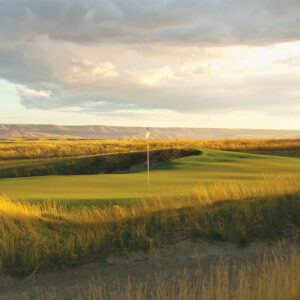
6 • Salish Cliffs • Shelton
When the Squaxin Island Tribe elders invested in Salish Cliffs Golf Club, they had no idea how well it would turn out. The Tribe was simply looking for an amenity for folks to play-and-stay at the nearby Little Creek Casino in Shelton. Yet when the course debuted in 2011, both Golfweek and Golf Magazine ranked it the best new course in the country. Such an amenity, as state golfers have again ranked it sixth.
That’s a tribute to the elders’ vision, who put in the necessary resources as well as the nationwide effort to attract the best designer. Gene Bates, who worked under both Gary Player and Jack Nicklaus, designed more than 150 courses worldwide, including another Northwest Native American-owned course, Circling Raven in Idaho. He designed the 7,269-yard Salish layout to cut neatly through the pristine fir forests while maintaining harmony with nature that the Tribe demanded. The course is salmon-safe and adheres to responsible environmental standards.
Golfers enjoy the sweeping views of the Kamilche Valley. There’s more than 600 feet of elevation change, the most dramatic is the par-3, 161-yard 17th hole, 80 feet above the valley floor. The round ends with folks hitting into the unique Bates-inspired 15,000-square-foot 18th/9th shared green.
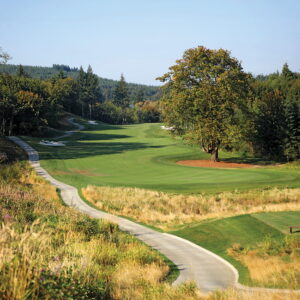
7 • Washington National • Auburn
This is a serious golf experience. Local golfers realize when they come to Washington National in Auburn, they are going to be challenged. Opened in 2000, it was designed (by Northwest architect John Fought) with the best golfers in the country in mind.
It is the home of the Washington Huskies golf team, which annually ranks among the top collegiate teams in the nation. Huskies such as Nick Taylor, C.J. Pan, and Joel Dahman have played here on their way to professional tours. Its training facility, with a 11,000-square-foot practice green, a practice bunker and bent grass chipping area, is one of the best in the state.
The Husky Invitational is held here as well as NCAA regional competitions. All that only benefits the rest of us and why Washington National has a solid stake in our top 10. Players’ games are tested, such as distance at the par-4, 473-yard (Husky tees) sixth hole, or accuracy at the par-4, 313-yard 15th that features a wide moat in front of the green. There is no doubt, to the end, where this course’s allegiance is, as the par-4, 391-yard 18th hole features a “W” shaped bunker in front of the green and “W” insignia adjacent to it.
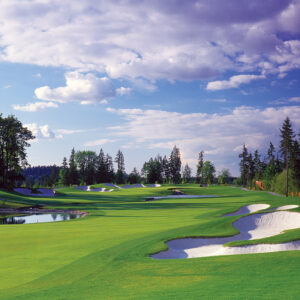
8 • Desert Canyon • Orondo
Desert Canyon Golf Resort faced challenges a couple of decades ago. Opening in 1993, the course, in remote Orondo, was slow to catch on. The tee sheet was sparse, and course maintenance was finding its way. The financial burden led to bankruptcy in 2006.
Homestead Northwest, Inc., owned and operated the property without much improvement until Don Barth, who owned Alta Lakes Golf Resort, took full control in 2011, along with partners Randy and Lyn Anderson. Barth had a vision and seized on it. He polished this gem, and it has become a steady top-10 layout.
The doleful beginning was puzzling because anyone could see its potential just standing on the opening hole. The magnificent granite wall down the fairway and across the Columbia River is breathtaking. Late Northwest architect Jack Frei (and Rick Fehr) made sure golfers drove right toward that wall on No. 1 as well as the par-5, 515-yard 10th hole. It’s in sight for the entire front nine before the 7,285-yard course meanders back through a desert prairie. The par-5, 632-yard 15th hole, on the edge of a canyon, has been described as the signature hole, but the course is full of signatures and maintenance is exceptional again for this desert beauty.
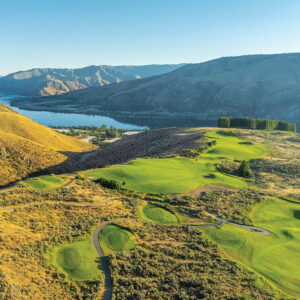
9 • Palouse Ridge • Pullman
This is the second course (No. 3 Gold Mountain Olympic is the other) in the top 10 designed by late golf architect John Harbottle, a Washington graduate who left a lasting golfing gift to Washington State. His name is destined to be invoked when the course hosts three prominent events — the Pacific Northwest Men’s Amateur in July, the Pacific Northwest Pro-Am Championship Sept-30-Oct. 1, and the Pac-12 Men’s Golf Championships in 2027.
The original $12 million project was praised from the beginning, ranked the second-best new course by Golfweek when it opened in 2009 and ninth best in the world by Travel & Leisure Golf. Golf Digest considers it eighth among best college golf courses. The 7,335-yard layout features a unique back nine with three par-3s, three par-4s and three par-5s. Palouse is prominent among a wave of state courses opened this century, including Chambers Bay (No. 1), Gamble Sands (No. 2), The Home Course (No. 4), Wine Valley (No. 5), Salish Cliffs (No. 6), Washington National (No. 7), Suncadia’s Prospector (No. 12), Scarecrow (No. 14) and Suncadia’s Rope Rider (No. 18).
10 • White Horse • Kingston
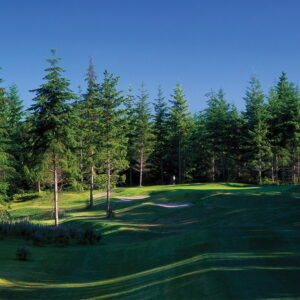
White Horse is like an old friend, as it returns to the top 10. Its design, playability and its Northwest fir beauty are undeniable. Its place among the best in the state should be everlasting. Credit goes to the Suquamish Indian Tribe, which purchased the Kingston layout basically out of bankruptcy in 2010 and transformed it into a luscious walk through an old growth forest.
The late course architect John Harbottle, with two courses in the top 10, shows up again here. The original design — by Cynthia Dye McGarey, the first female designer to win new course of the year by Golf Digest — was hailed as challenging yet a bit too difficult. Harbottle was hired to soften the edges for more predictability and playability. State golfers rank it in the top 10 again but Golf Advisor places it in the top 25 in the nation.
The telegenic pristine setting prompted the USGA to have its LPGA Legends Tour women’s event at the course. The course concentrates on the Chief Seattle Golf Days Tournament, now in its 15th year on Aug. 13. What makes their day even more enjoyable is taking the 20-minute Kingston ferry ride from Edmonds to this 7,093-yard nature walk.
How’d We Do It?
The voting system we installed in 2024 is clearly working, as we received another bumper-crop response this year, with well over 5,000 pieces of data to calculate. We awarded 15 points to the course that was at the top of voter’s lists, 14 for second, etc.
Chambers Bay, which has become the perennial winner, amassed a grand total of 3,609 points — 1,116 more than it won in 2024. An astonishing 37 courses received at least one first-place vote. We think 37 different tracks being someone’s favorite is a remarkable number, and it shows the diversity and widespread quality of our state’s public golf. Thirty-one percent of voters chose Chambers Bay as their No. 1 course in the state, while 17 percent said Gamble Sands is best.
___
The Top 10
Rank Course – Total Points
1 Chambers Bay 3,609
2 Gamble Sands 3,140
3 Gold Mountain Olympic 2,596
4 The Home Course 2,509
5 Wine Valley 2,320
6 Salish Cliffs 2,090
7 Washington National 2,014
8 Desert Canyon 1,407
9 Palouse Ridge 1,383
10 White Horse 1,316
___
The Second 10
Rank Course – Total Points
11 Apple Tree 1,188
12 Suncadia Resort Prospector 1,181
13 Trophy Lake 1,069
14 Gamble Sands Scarecrow 1,068
15 Port Ludlow 1,015
16 Bear Mountain 967
17 Gold Mountain Cascade 851
18 Suncadia Resort Rope Rider 812
19 Druids Glen 582
20 The Cedars at Dungeness 557
___
Others receiving votes beyond top 20, in order:
Newcastle Coal Creek, Shuksan, McCormick Woods, Loomis Trail, Alderbrook, Indian Summer, Avalon, Indian Canyon, Eagles Pride, Mt. Si, North Bellingham, Newcastle China Creek, Moses Pointe, Canyon Lakes, Auburn, Echo Falls, Highlander, Capital City, West Seattle, Cedar Irons, The Creek at Qualchan, Everett Legion Memorial, Cedarcrest, Camas Meadows, Redmond Ridge, Latah Creek, Desert Aire, Hawks Prairie Links, Harbour Pointe, Battle Creek, Hawks Prairie Woodlands, The Classic, High Cedars, LakeLand Village, Bellevue, Snoqualmie Falls, Riverbend, Columbia Point, Sun Country, Oakbrook, Nile, Willows Run Eagle, Whidbey, Downriver, Foster Golf Links, Snohomish, Sudden Valley, Jefferson Park, Meadow Park, Lake Chelan, Horn Rapids, Jackson Park, Camaloch, Tumwater, Walter Hall, Willows Run Coyote, Kahler Mountain, Swinomish Golf Links, Gallery, Lake Wilderness, Gleneagle, Ocean Shores, Sun Willows and Riverside.
Industry Colleagues
One of our favorite aspects of writing this feature is the chance we get to reconnect with industry colleagues we might not have seen or spoken with for several years. We ask everyone in the contacts lists on our phones and everyone in old telephone and address books (yes, we refuse to discard them like normal people do) who we know has a good deal of experience and a deep understanding of public golf in Washington to give us their rundown of the state’s public courses. It doesn’t matter where they are from, necessarily.
For nearly 20 years, we’ve been friends with golf writers from as far away as Maine who contributed to our industry poll again this year. It’s always nice to hear from them and their high regard for our home state, some of them volunteering that they actually prefer our piece of the union to theirs.
It’s certainly not just writers we talk to, though. Many others get the call: club professionals, teaching professionals, superintendents, course builders, clubhouse managers, food and beverage directors, CEOs of companies involved in the golf industry, course designers and even a handful of PGA Tour pros we’ve been lucky enough to get to know and who are familiar with Washington public golf.
And, as in 2024, Gamble Sands came out on top again. We’ve written about this in the past and can never be quite sure why industry colleagues put the Brewster course above the former U.S. Open venue while readers go the other way. But it’s a thing because it happens consistently. And while Scarecrow came in 14th with readers, it finished third, Gold Mountain (Olympic) in fourth, with colleagues who obviously have had more of a chance to play the new Kidd/Schaan high desert masterpiece.
Wine Valley, Salish Cliffs, Palouse Ridge, and Indian Canyon were other big vote-winners, Indian Canyon enjoying a significant jump up the table. Noticeably, though, while readers clearly love The Home Course, it doesn’t resonate quite so deeply with those employed in the industry.
___
Rank Course – Total Points
1 Gamble Sands 612
2 Chambers Bay 517
3 Gamble Sands Scarecrow 496
4 Gold Mountain Olympic 408
5 Wine Valley 334
6 Palouse Ridge 317
7 Salish Cliffs 309
8 Indian Canyon 286
9 Suncadia Resort Rope Rider 238
10 White Horse 194
___
Other courses receiving votes in order:
Trophy Lake, Suncadia Resort Prospector,
Washington National, Desert Canyon,
The Home Course, Druids Glen, Loomis Trail
and Bear Mountain Ranch.
Best By Region
If you’re heading north (Everett, Bellingham, etc.) to the Olympic Peninsula, or east to central and eastern Washington at any point during the rest of the summer or want to schedule your summer tee times for 2027, you’ll find this info very useful. You the reader brought this to life.
Frankly speaking, it’s such a bonus to us all that we have such a collection of diverse ecosystems in which to showcase regions such as these. With linksland, parkland, heathland, mountains, meadows and desert, the Evergreen State stands alone in the U.S.
___
Olympic Peninsula
1. Gold Mountain Olympic
2. Salish Cliffs
3. White Horse
4. Trophy Lake
5. Port Ludlow
6. Gold Mountain Cascade
7. The Cedars at Dungeness
8. McCormick Woods
9. Alderbrook
10. LakeLand Village
___
Seattle/Tacoma/Eastside
1. Chambers Bay
2. The Home Course
3. Washington National
4. Druids Glen
5. Newcastle Coal Creek
6. Indian Summer
7. Eagles Pride
8. Mt. Si
9. Newcastle China Creek
10. Auburn
___
North-to-the-Border
1. Shuksan
2. Loomis Trail
3. Avalon
4. North Bellingham
5. Legion Memorial
6. Cedarcrest
7. Harbour Pointe
8. Battle Creek
9. Whidbey
10. Snohomish
___
Central Washington
1. Gamble Sands
2. Desert Canyon
3. Apple Tree
4. Suncadia Resort Prospector
5.Gamble Sands Scarecrow
___
Eastern Washington
1. Wine Valley
2. Palouse Ridge
3. Indian Canyon
4. The Creek at Qualchan
5.Latah Creek
Movers & Shakers
We always enjoy looking back at our (or rather, your) first ranking and comparing it with the current year’s list. Our original Cascade Golfer Top 10 Best Public Courses in Washington came out in 2013 and went like this: 1. Chambers Bay, 2. Gold Mountain Olympic, 3. Wine Valley, 4. Salish Cliffs, 5. Palouse Ridge, 6. Washington National, 7. The Home Course, 8. Suncadia Resort Prospector, 9. White Horse and 10. Desert Canyon.
As you can see, there’s been very little change — the only significant difference is the addition of Gamble Sands, which went straight in at No. 2 in 2015, enjoyed a brief stay in the top spot in 2017, and has pretty much shored up the second spot since then.
Prospector at Suncadia has dropped out of the top 10, but not very far, and there have been a few other tiny changes. Nothing spectacular.
The movement of one course, though, has interested us in particular. In 2013, The Home Course was seventh, then went ninth, seventh, sixth, and eighth over the next eight years. Last time out, it rose to fourth. Moving up four or five spots isn’t typically a big deal, but when we are talking about a rise of that size within the top 10, it is a big deal.
We wondered if it might be an anomaly, something to do with the new voting system we introduced in 2024, or if fans of The Home Course had made a special effort to vote in larger numbers this time. Nope, it did it again. There it is in fourth place, maintaining its small advantage over Wine Valley (189 votes) and somewhat larger lead over Salish Cliffs (490 votes).
We’re not terribly surprised to see Washington National jump three places. We’ve always thought it a superb design and, though we’re aware it dropped a few places in recent years with some conditioning issues, we’ve always known it has great bones. The courses above it are pretty special, and it may be hard to rank much higher, but you never know. We were impressed to see the rise of The Home Course, and may see the same thing with Washington National in the future, too.
White Horse’s three-place jump isn’t very surprising either. Dropping six places from seventh in 2022 to 13th in 2024 had surprised us, however. We’re really not sure why that happened, but we are glad to see it back in the top 10 where we believe it belongs. They do exist, certainly — New York, Florida, California, North Carolina, Michigan, Texas — but there can’t be too many more states where a course as good as White Horse wouldn’t make it into the top 10.
Druids Glen’s drop from 15th to 19th isn’t calamitous, but that’s what the 2026 ranking shows. Perhaps further development in the property is in the cards for this jewel as we here at Cascade Golfer have always felt it has top 10 potential.
Scarecrow’s arrival caused a little disruption in the rankings (see “Industry Colleagues”), and we suspect it will just go on climbing.
Outside the top 20 Movers & Shakers below, we were pleased by the rise of Shuksan in the North-to-the-Border region. In 2024, it finished 12th in the category, but this time it catapulted all the way to the top, even overtaking the always-impressive Loomis Trail and Avalon. We knew John Tipping would have a big impact when he took over as General Manager at the start of 2025, but 12th to 1st? This result has 2026 Golden Tempo Kentucky Derby vibes, and the readers have spoken.
Here’s the exciting movement within the top 20.
___
2026 Rank – 2024 Rank – Change
1 Chambers Bay 1 none
2 Gamble Sands 2 none
3 Gold Mountain Olympic 3 none
4 The Home Course 4 none
5 Wine Valley 5 none
6 Salish Cliffs 6 none
7 Washington National 10 +3
8 Desert Canyon 7 -1
9 Palouse Ridge 8 -1
10 White Horse 13 +3
11 Apple Tree 11 none
12 Suncadia Resort Prospector 12 -3
13 Trophy Lake 13 -1
14 Gamble Sands Scarecrow NA NA
15 Port Ludlow 14 -1
16 Bear Mountain Ranch 17 +1
17 Gold Mountain Cascade 18 +1
18 Suncadia Resort Rope Rider 16 -2
19 Druids Glen 15 -4
20 The Cedars at Dungeness 21 +1
Next 10
TOP 11-20 TRACKS
11 • Apple Tree • Yakima
If you asked a random Washington golfer which course had finished 12th, 15th, 15th, 13th, 13th, 11th, and 11th in the seven top 10 contests we had run, there’s a pretty good chance they’d say Apple Tree in Yakima. Readers know it’s a really fun round that’s worth the effort to get to. It puts Yakima on the golf map and we’re glad it does. The weather, wine, beer and relaxed atmosphere make Apple Tree a Casacade Golfer favorite each year.
The main attraction, of course, is the apple-shaped island green at the par-3 17th hole. It would be unfair, not to say totally inaccurate, to suggest it’s a main reason people choose to play Apple Tree. Just as it would be totally inaccurate to say you won’t be thinking about it for the first 16 holes of your round (as well as during the drive to the course, eating breakfast that morning, while sleeping the night before, and really every moment between scheduling your tee time and boarding the tee). You might have bogeyed every hole up to this point, but if you find the green safely and walk off with a par, you’ll momentarily forget what has gone before and float to the 18th tee.
12 • Suncadia Resort Prospector • Cle Elum
On Aug. 30, 2005, a little over a year after the front nine of his design firm’s Prospector Course had opened at the 6,000-acre Suncadia Resort, Arnold Palmer helicoptered in, landed on the practice ground, and walked into the Prospector Inn (now the Inn at Suncadia) to address a room full of media personnel. In typically flamboyant, articulate and gracious style, Palmer said how much he’d enjoyed designing his second course in Washington (Semiahmoo was the first in 1986).
“This is one of the greatest sections of the country to build a golf course with the firs, the various types of pines and the different seasons,” he said. “This is just a perfect place to come play golf and enjoy the Northwest.”
You could tell he meant every word, no matter the official count of how many times he’d actually been on-site. And people have been enjoying the beautiful layout that journeys through a stately pine forest with views of Mt. Baldy, Domerie Peak, and the Thomas and Red mountains, for over 20 years now. Playing the bunker-heavy 10th hole with its 150-foot drop from the tee and magical views to the west is one of Washington golf’s great moments.
13 • Trophy Lake Golf & Casting • Port Orchard
At the turn of the century, John Fought’s design career was running at full throttle. Langdon Farms and The Reserve Vineyards in Oregon, The Gallery in Arizona, Ridge Creek in California, and Windsong Farm in Minnesota all came online around that time, and he left two very impressive reminders of his talent on the Washington landscape. Washington National in Auburn was perhaps the pick of them, but Trophy Lake, which had opened about a year before, wasn’t far behind and might actually get a lot of Washington golfers’ vote.
It embarked on a three-phase, three- to four-year bunker renovation at the end of 2025 with the ever-dependable Ridgetop Golf leading the project. Besides filling the bunkers with new sand, some have moved while others have been rebuilt. The focus is on improved playability, with most of the bunker faces being sodded. It’s too early to tell what impact the work might have on the course’s future ranking, but all reports coming out of the course in Port Orchard, 12 miles southwest of Bremerton, have so far been positive. So, who’s to say Trophy Lake won’t return to the top 10, where it has been three times before, in 2028?
14 • Gamble Sands Scarecrow • Brewster
This may be the last time we write about Scarecrow being in Washington’s second 10. We speculated over how high it might finish this year, weighing how good it is with how few readers are likely to have played it, given how young it is. Many journalists have shared, its future competition will come from its sister course at Gamble Sands and Chambers Bay for top accolades.
We said in the past how we thought the Brewster resort’s second layout would be earning its stripes when compared to the original Sands course because the site was still coming of age. And we’re happy to report that it’s not looking or playing anything short of world-class.
The circle irrigation fields and surrounding lines of apple trees visible on Google Earth (and from the Gamble Sands parking lot) for a while didn’t inspire much confidence, but scrape away the top layer, and the sandy soil and intriguing ground features that had seemed hidden for so long gradually revealed themselves. Pair that recipe with Nick Schaan and David McLay Kidd’s vision and skill for unearthing great golf holes, and the final result was extraordinary. There are several unforgettable moments at Scarecrow, and it’s a round you will be eager to repeat.
15 • Port Ludlow Resort • Port Ludlow
Famed Port Ludlow designer, Robert Muir Graves led an interesting life, graduating from UC Berkeley (Landscape Architecture) before joining the Navy during the Korean War. He was proficient in music, horseback riding, and several sports, and was a visiting lecturer at UC Berkeley, the University of Massachusetts, Utah State, and the Harvard Graduate School of Design. He is credited with over 70 original designs, of which Port Ludlow is surely one of his most beloved. His worldly gifts come shining through at this amazing course.
This beautiful layout, so typical of the Pacific Northwest, promises a peaceful journey through a forest of handsome conifers with several water hazards adding to the challenge. The water-carry par-3 17th (8th on the Timber Nine) is perhaps the course’s most memorable hole, asking for a long/mid-iron over a large pond. It’s a tough shot, but there’s plenty of room right, and the large green should accommodate all but the worst mishits.
Port Ludlow is one of the few resorts you can get to from Seattle or Tacoma in an hour or less, and it has been a Puget Sound favorite for many years.
16 • Bear Mountain Ranch • Chelan
If we ever decided to run a contest seeking to identify Washington golf’s most thrilling reveals, it’s likely playing the front nine at Bear Mountain Ranch would vie for top spot.
Coming off the second green, you turn north and enjoy a stretch of golf dominated by amazing views over Lake Chelan and the Cascade Mountains. At the sixth, you turn back on yourself for an interesting, dogleg left, par 4 before turning toward the lake, again, for the long par-3 seventh hole. There are plenty more invigorating holes on the back nine, which finishes with a gargantuan par 5/6 of 680 yards (tees are set at 627, 580, 518 and 481 yards) where you must carry a creek just short of the green. Really, whatever marker you play it from, a par will be a thoroughly satisfying way to end a memorable round.
The course opened in 2005 and was designed by the original developer Jerry Scofield, the “King of Central Washington Golf” Don Barth, and Bellevue landscape architect Robert Yount. The trio couldn’t muster a single course architecture qualification between them (Barth added nine holes at Alta Lake in the 1980s), but what a course they built at Bear Mountain Ranch.
17 • Gold Mountain Cascade • Bremerton
This is an exciting time for Gold Mountain. The municipally owned facility offers golfers amazing rates at one of the finest municipals in the country; the John Harbottle-designed Olympic Course (1996) finished third in our rankings. It is also upgrading its other popular Cascade Course, designed by Ken Tyson (1971), with a comprehensive, multi-year renovation led by Canadian architect Jeff Mingay.
Self-funded (no tax dollars), the renovation on Cascade will surely enhance its duel offering with Olympic, thanks to the job Mingay is performing. We’re certain it will be almost unrecognizable come the end of the decade, by which time 12 percent of its trees will be gone, some greens will have been relocated and recontoured, several tees will have moved, bunkers will either have been repositioned or taken out, and the irrigation system will have been replaced.
So, what is now an enjoyable but aging and overgrown layout that has finished in our top 20 in the last three contests will have become a vastly better-conditioned course that’s more strategic and engaging while maintaining its Pacific Northwest character. Who knows, by 2030, perhaps it will be pushing for a spot in the top 10?
18 • Suncadia Resort Rope Rider • Cle Elum
It appears readers don’t really know what to make of Rope Rider, the Prospector Course’s neighbor at Suncadia. Since 2013, the Peter Jacobsen/Jim Hardy design that opened in 2011 has finished 11th, 8th, 14th, 17th, 26th, and now 16th in our rankings. Can anyone say fluctuating?
We’re at a bit of a loss to explain it. We rate it highly because of its undoubted beauty, the innovative routing that makes three six-hole loops possible, and the wonderfully firm conditions. So, we weren’t at all surprised by the eighth-place finish in 2015. Falling to 26th, though? Rope Rider? Really?
Perhaps, for a spell, not enough people were going to play the course whose last three holes on the front nine surround the 120-foot-high pile of coal-mining tailings, known as Tipple Hill. That might be just clutching at straws, though. Maybe people just had a bad round. Whatever caused it, we’re encouraged to see the course that’s named for the brave miners who rode the treacherous rope tracks into the coal seam between the late 1800s and middle of the 20th century, and where each hole has a youth tee so the whole family can play together, is back in the top 20 where it belongs — it’s such a gem.
19 • Druids Glen • Covington
We’ve become disheartened by the lack of activity at Druids Glen over the last few years. And we can’t imagine how frustrating it must be for those that play there regularly. It was only four years ago that the owners, Phoenix-based Parks Legacy Project (PLP), were talking about adding purple heather, rebuilding bunkers, adding another set of tees, and replacing the irrigation system. But here we are in 2026, with the only change being the doubling of the number of people signing the petition demanding that the course be saved from developers.
It would be a crying shame to lose this superb Keith Foster design that opened in 1997. Set on 230 acres of second-growth forest, it measures 7,146 yards from the tips and features bent/poa annua greens with about 60 bunkers and nine lakes. Oh, and perhaps the best view of Mt. Rainer from any course in Washington. Our hope is that PLP’s favored architect, Forrest Richardson, finally gets the opportunity to do the work it has been talking about since it purchased the course in September 2019. Then it might stop clinging to a place in the top 20 and legitimately set its sights higher.
20 • The Cedars at Dungeness • Sequim
With 557 points, The Cedars at Dungeness has made it to the top 20 at last. After failing to get a mention in 2013-2015, it finally popped onto the radar in 2017 by finishing 44th. It rose to 27th place two years later and climbed again in 2022, finishing 21st. It repeated its 21st place last time out, and this time it won the votes it needed to move one place higher still.
Several improvements have been made over the years to the Jack Reimer-designed Dungeness GC, whose first nine holes opened in 1969 and was purchased by the Jamestown S’Klallam tribe in 2007. The tribe changed its name to The Cedars at Dungeness to link it to its 7 Cedars Casino and Resort, 12 miles southeast in Blyn. The Cedars at Dungeness is everything the typical Pacific Northwest course should be, with its share of handsome pines, firs and cedars, and amazing mountain views looking southwest towards the Olympics. It does differ from every other PNW course, however, by having a huge, crab-shaped bunker short and right of its third green. The Olympic Mountain rain shadow helps create excellent conditions that help ensure a very enjoyable day out.